Transport guide - United States - North America

Transport in Miami

Ride-hailing, driving, Metrorail in select corridors, and district-based movement shape Miami more than walking between major areas does.

Best time: December to April.

Airport arrival

Miami arrival usually starts at MIA with Metrorail, taxi, ride-hailing, hotel shuttle, or a direct beach transfer depending on where you stay.

Local transit

Ride-hailing, driving, Metrorail in select corridors, and district-based movement shape Miami more than walking between major areas does.

Main rule

Group each day by area and use the simplest route.

Key takeaways

How transport works in Miami

Match the route to the shape of the city, not just the map.

  • Group the day by area
  • Use the simplest transfer
  • Let walking and transit support each other

Ride-hailing, driving, Metrorail in select corridors, and district-based movement shape Miami more than walking between major areas does.

Miami works best through one side at a time with selective rides, Brightline or Metromover help where relevant, and short walkable clusters, not broad all-day movement between beach and mainland districts. Airport to the right base is the cleanest first move because Miami gets weaker fast when the hotel and the daily route sit on opposite sides of the bay logic.

Most transport problems come from forcing too many district changes into one day rather than from the system itself.


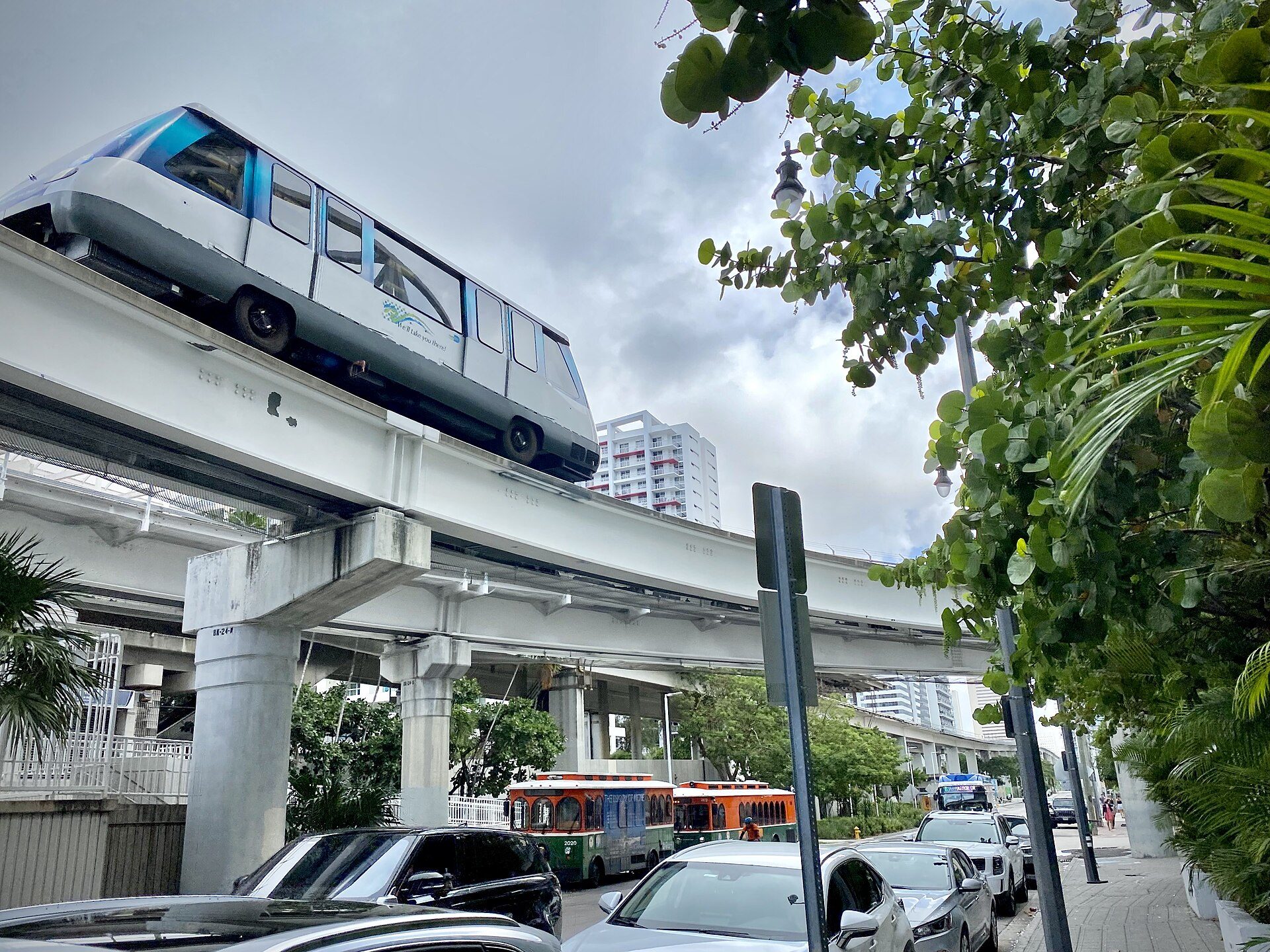
Transit scene in Miami
Photo by Sharon Hahn Darlin

Airport transfers and first-day movement

Your arrival decision shapes the whole first day.

  • Do not over-optimize the cheapest route
  • Check the final hotel connection
  • Keep one backup option

Miami arrival usually starts at MIA with Metrorail, taxi, ride-hailing, hotel shuttle, or a direct beach transfer depending on where you stay.

Airport transfers only feel easy when the final hotel leg is realistic. A direct transfer can be worth it if the rail or bus answer turns awkward after a long flight.

A calmer first transfer usually protects the energy you need for the rest of day one.

Central Miami street scene
Photo by Dori

Best way to move around Miami each day

Use the city system as a tool, not as the whole plan.

  • One corridor or district cluster at a time
  • Use direct rides selectively
  • End near dinner or the hotel

The easiest urban days usually pair one strong walking district with one transit-supported move rather than repeating long back-and-forth journeys.

If the local system is direct, use it. If the final leg becomes awkward, paying for one clean ride can be the better decision.

Good transport planning is really route planning: fewer crossings, fewer transfers, and fewer dead miles.

Restaurant or cafe scene in Miami
Photo by CZmarlin — Christopher Ziemnowicz would appreciate a photo credit if this image is used anywhere other than Wikipedia. Please leave a note at Wikipedia here. Thank you!

Passes, tickets, and what to check before buying

The cheapest fare is not always the smartest fare.

  • Count real rides, not imagined rides
  • Airport tickets may use different rules
  • Short trips need simple logic

Many visitors overbuy transit passes before they understand how many rides they will actually take.

Airport fares, regional lines, and tourist cards often follow different rules, so check those before buying anything that looks like an all-in-one answer.

For short city breaks, simplicity usually beats tiny savings.

Major attraction in Miami
Photo by Sharon Hahn Darlin

FAQ

What is the best way to get around Miami?
Ride-hailing, driving, Metrorail in select corridors, and district-based movement shape Miami more than walking between major areas does.
Should I buy a transit pass in Miami?
Only if the number of planned rides clearly justifies it. Many short trips work better with simple pay-as-you-go logic.